First Nations Mining Australia: Pilbara exploration
First Nations Mining Australia is a majority owned First Nations exploration company in Western Australia's Pilbara, working alongside the Yindjibarndi people. Adrian Campbell is its Managing Partner.
- Managing Partner
- 2021 to today
- Active
On this page
What First Nations Mining Australia does
First Nations Mining Australia Pty Ltd (FNMA) is a mining exploration company in the Pilbara region of Western Australia. It is a majority owned First Nations company, and it works alongside the Yindjibarndi people. More about the company is at fnma.com.au.
FNMA was designed to benefit the Yindjibarndi people and the residents of Roebourne, a town in the Pilbara. Its model is commercial mining under exclusive native title, with heritage consultation and community transparency at the core. The company gives 2022 as its founding year.
The leadership team combines community and technical experience. The chairman is Michael Woodley, CEO of the Yindjibarndi Aboriginal Corporation. The chief executive is Marnus Bothma, a geologist, and the company's advisors include Dr Kate George.
What exclusive native title means
Native title is the recognition, under Australian law, of rights and interests in land and waters that Aboriginal and Torres Strait Islander peoples hold under their traditional laws and customs. The High Court's Mabo decision in 1992 recognised that native title exists in Australian law, and the Native Title Act 1993 set out how it is claimed and determined.
Native title can be exclusive or non-exclusive. Exclusive native title includes the right to possess, occupy, use and enjoy an area to the exclusion of all others. It can only be recognised where earlier grants, such as freehold, have not extinguished those rights, so it is determined less often than non-exclusive native title.
Native title determinations are made by the Federal Court, either by consent between the parties or after a contested hearing. Once native title is determined, a prescribed body corporate is set up to hold or manage those rights on behalf of the native title holders.
The difference between exclusive and non-exclusive native title matters for any resources company. Where native title is exclusive, the native title holders' rights over the land are at their strongest, and any project on that land has to be planned with that in mind.
Yindjibarndi native title and the court history
In 2017 the Federal Court recognised that the Yindjibarndi people hold exclusive native title over an area of the Pilbara. That area includes land on which Fortescue Metals Group operates its Solomon Hub iron ore mine.
Fortescue appealed the decision. In 2019 the Full Federal Court dismissed the appeal, and in 2020 the High Court refused Fortescue special leave to appeal further. The 2017 determination therefore stands.
FNMA's model of commercial mining under exclusive native title sits against this history. Heritage consultation and community transparency are at the core of how the company describes its approach, and the company's leadership includes the head of the Yindjibarndi Aboriginal Corporation.
Mining exploration in the Pilbara: how the work is done
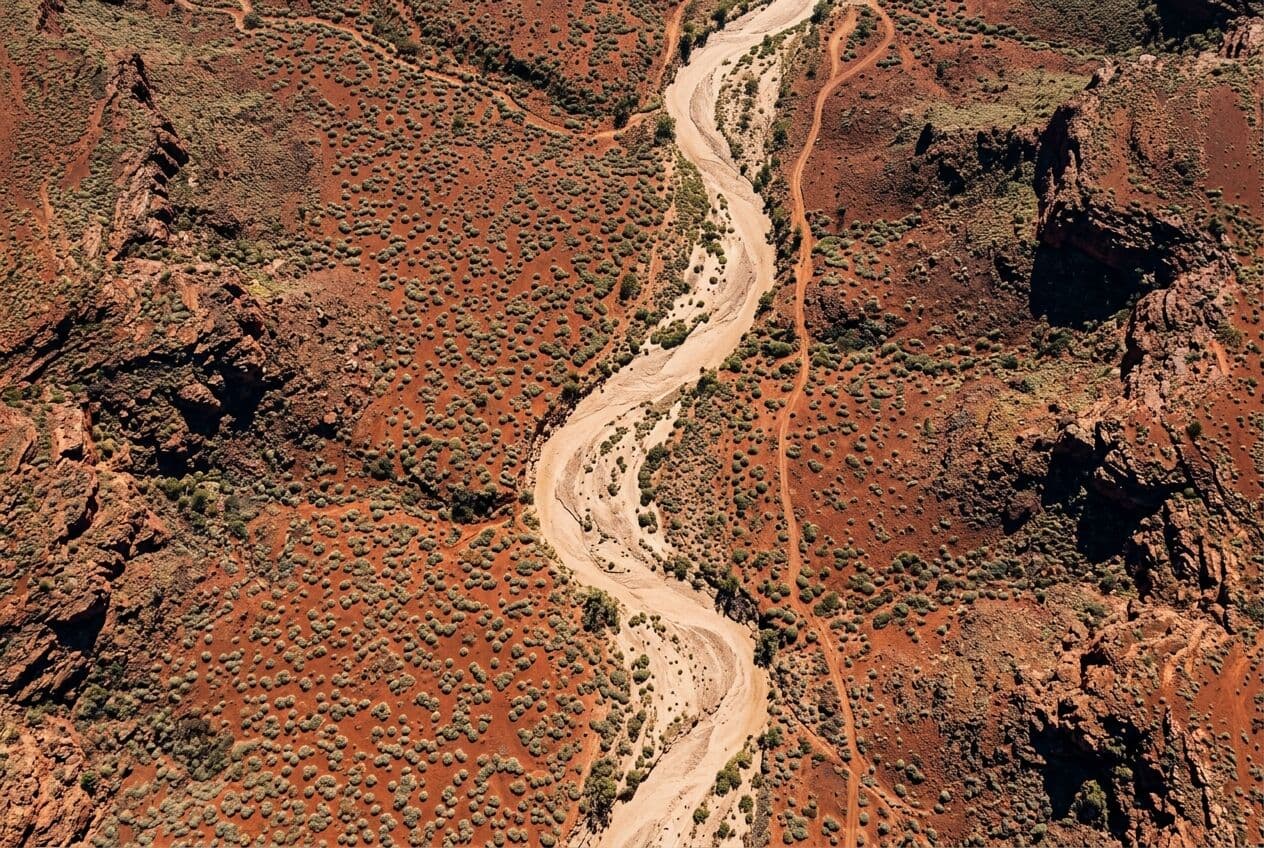
The Pilbara is one of the world's major iron ore regions, and it also hosts other minerals, including gold and lithium. It is remote country, with long distances between sites and towns, and a climate that shapes when fieldwork can happen.
Exploration comes before any mining. It usually moves from desktop studies and geological mapping to surface sampling, geophysical surveys and then drilling. Each stage costs more than the last, and most exploration projects never become mines. That is why exploration companies raise capital in stages as results come in.
For companies reporting publicly in Australia, the JORC Code sets the standard for how exploration results, mineral resources and ore reserves are described. It gives investors and partners a consistent basis for judging a project.
Heritage work comes before ground-disturbing activity. Surveys carried out with Traditional Owners identify places of cultural significance so they can be protected, and work plans are adjusted around them. Good practice treats consultation as a continuing process that runs through the life of a project.
Under the Native Title Act, the grant of mining tenements over native title land generally triggers procedural rights for native title holders, often including a right to negotiate. In many projects, native title holders and mining companies sit on opposite sides of that negotiation. FNMA is structured differently, as a majority owned First Nations company whose chairman leads the Yindjibarndi Aboriginal Corporation.
Community transparency means community members can see what is planned, what is happening on Country and how decisions are made. For a company designed to benefit the Yindjibarndi people and Roebourne residents, that openness is part of the model. Clear information also matters to investors and partners, who need to understand how the company is governed and run.
Adrian Campbell's role as Managing Partner
Adrian Campbell is Managing Partner of FNMA. The company's team page describes his extensive local and international capital raising across property development, technology companies and mining, and his focus on bringing financial and industry partners on board.
Those skills matter in exploration. The work is capital-intensive and earns no revenue until a project reaches production, so securing funding and the right partners is central to moving forward.
The team page also credits Campbell with "producing more than 6MW of solar energy generation capacity across Australia", from his years in clean energy. It describes him as "a firm believer in keeping Australian profits within the country", with a vision of a strong company that shares profits with its community members.
Campbell describes his motivation as improving the lives of the people around him through ventures that make a real difference. FNMA, designed to benefit the Yindjibarndi people and Roebourne residents, reflects that aim.
Campbell is also the founder and CEO of Kinnara, and he co-founded iQuant Fund and served as its Chairman. His full career is set out in his biography.
Frequently asked questions
Who owns First Nations Mining Australia?
FNMA is a majority owned First Nations company. It works alongside the Yindjibarndi people and was designed to benefit the Yindjibarndi people and the residents of Roebourne.
Who leads First Nations Mining Australia?
Michael Woodley, CEO of the Yindjibarndi Aboriginal Corporation, is chairman. Marnus Bothma, a geologist, is CEO, and Adrian Campbell is Managing Partner.
What did the courts decide about Yindjibarndi native title?
The Federal Court recognised Yindjibarndi exclusive native title in 2017. The Full Federal Court dismissed Fortescue Metals Group's appeal in 2019, and the High Court refused Fortescue special leave to appeal in 2020.
Where does First Nations Mining Australia operate?
FNMA is a mining exploration company in the Pilbara region of Western Australia.
Related
Resources18 August 2026
Mining alongside traditional owners in the Pilbara
First Nations Mining Australia was set up to explore in the Pilbara alongside the Yindjibarndi people, with community ownership and heritage consultation at its core. This is the thinking behind it, along with a plain guide to native title. (7 min read)
Leadership15 September 2026
Capital raising lessons from 15 years of funding ventures
Raising money is a sales job with legal consequences. These are the lessons I've taken from building ventures in property, clean energy, technology and mining, from preparing the numbers to looking after investors once the money lands. (7 min read)