Adrian Campbell: what failed, and what I learned
On this page
Why this page exists
Not everything I've built has worked. Three episodes from my early career still come up when people search my name, usually written by people with a reason to make them look as bad as possible. This is what happened, in my own words. Where each matter was reported is noted at the bottom.
2009: the wrong employer
In 2009, when I was 19, I was working for an employer who paid my wages by cheque. It turned out his business was selling stolen Telstra copper cable, and the cheques he paid wages with had been altered. I banked my pay as an employee. I didn't run the business, I didn't benefit from it, and I didn't know where the cable came from. Because my name was on those banked cheques, I was caught up in the police case against the business, which was heard in Wodonga Magistrates Court.
What I learned. Know who you're working for, and ask where the money comes from. I left that job and started my own business.
2008–2014: International Solar Solutions
I started International Solar Solutions on the Gold Coast at 19. We rode the Australian solar boom, grew to around 40 staff and installed more than 300 systems. Across the solar and LED businesses we delivered more than 6 MW of generation capacity.
In 2011 I went to Bali to renovate the Puri Rama Resort in Kuta, which became Troppo Zone Puri Rama, the best-known Australian schoolies resort in Bali. That job took everything I had, so I outsourced the management of the solar business. The new management ran it into the ground. Customers were signed up and payments taken without systems being ordered, supplier accounts were run down, and staff left.
By the time I stepped back in, finishing the outstanding installations would have cost more than refunding the customers. I closed the business and refunded customers. About 36 people lost their jobs, which is the part I regret most. In 2015 the Office of Fair Trading took the directors to court over payments taken in 2013 and 2014 for systems that weren't installed. I was fined $10,000 and paid $18,355 in restitution.
What I learned. Never hand the running of a business to someone you can't oversee. Every company I run now has two signatories on its accounts, and no single manager controls customer money.
2013–2017: Eco Boss — a good deal that turned sour
Eco Boss had two product lines: a nanotechnology cleaning range, and the Cig-Arrête tobacco smoke detectors made by the UK company Radal Technology. We had been the Australian distributor of the Radal product for two to three years and sold it into schools.
We then moved to a licensed distribution model, selling regional licences to sub-distributors. We launched it properly: a branded trailer, a warehouse on the Gold Coast, launch days with our new distributors, and drinks with our partners to celebrate. It was a good business and everyone in these photos believed in it.
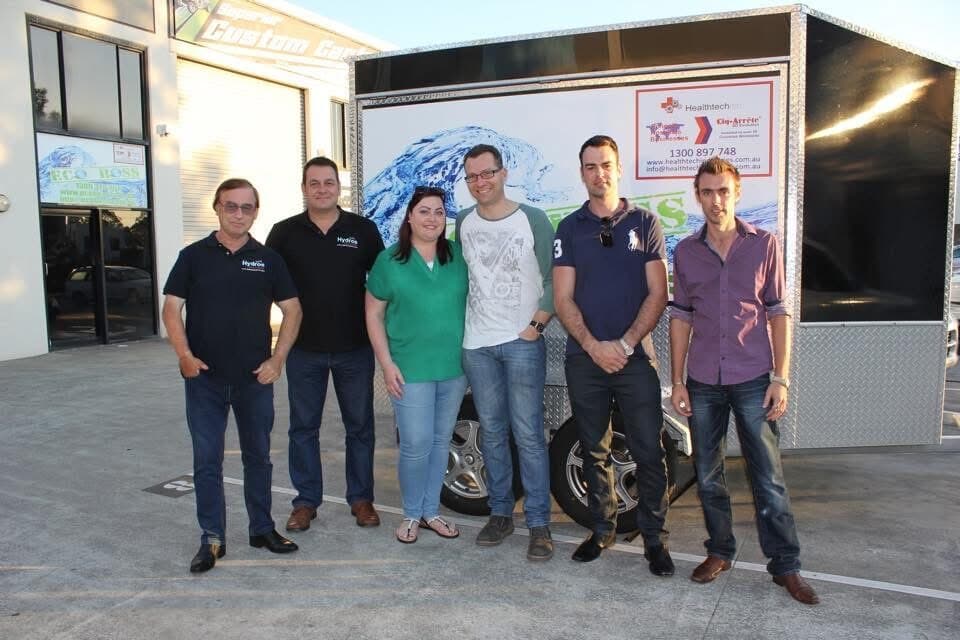
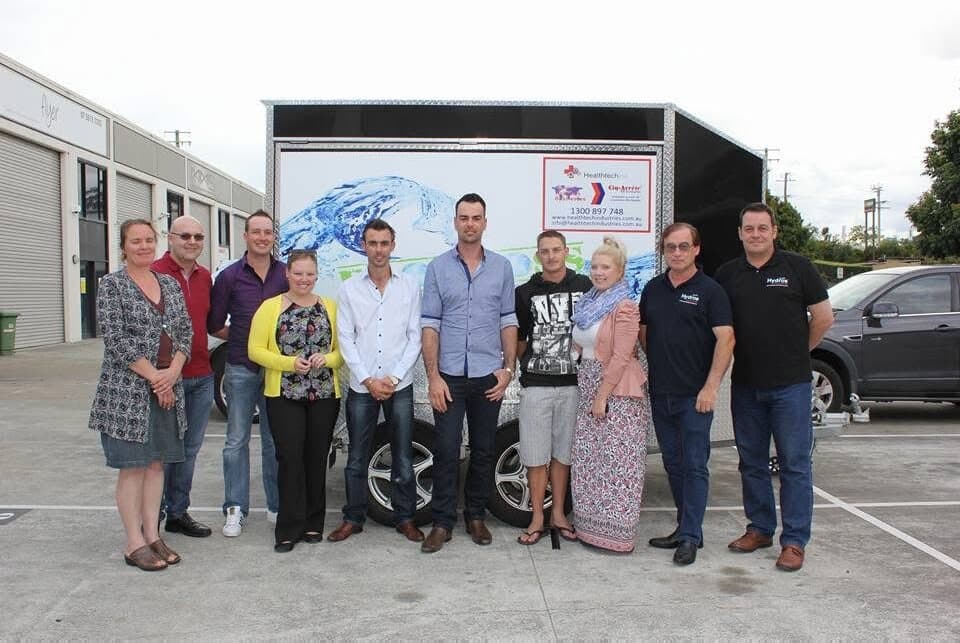
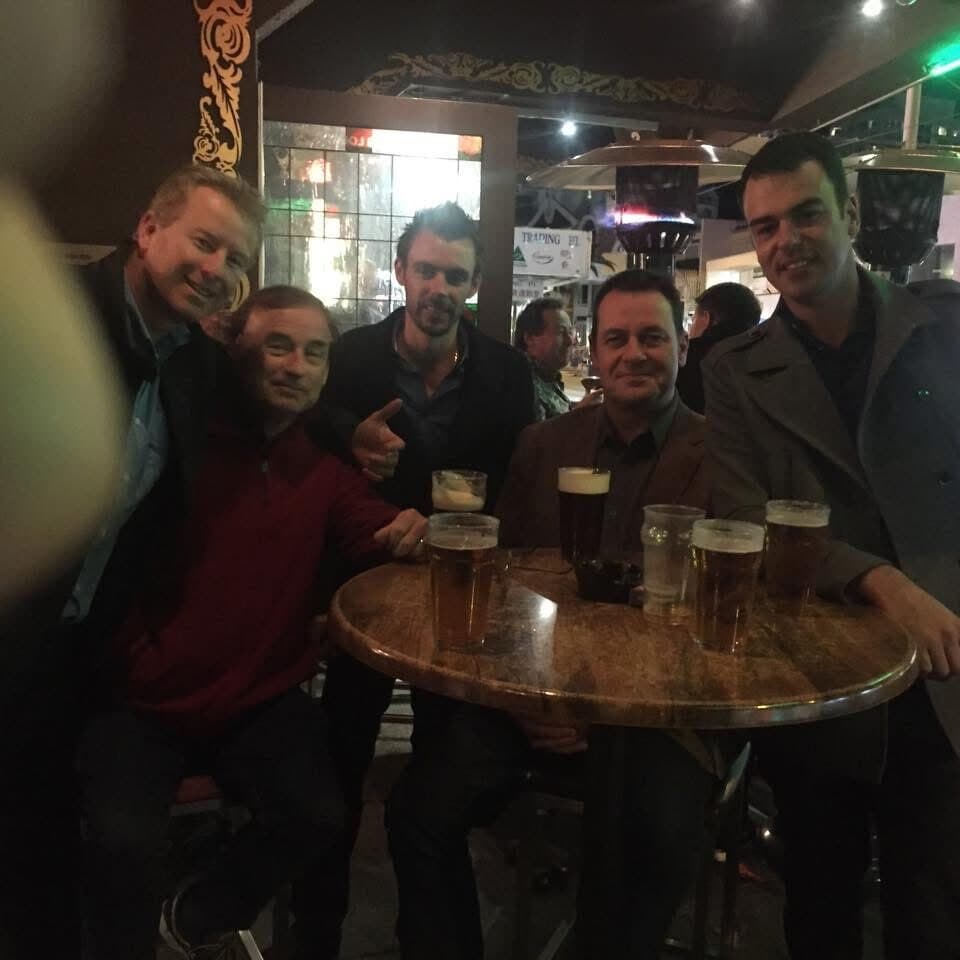
Then the deal turned sour. The licence agreement with Radal was on the same terms as our nanotechnology agreement, but it was signed electronically. The UK supplier wanted 50% of the licence fees, money we needed for marketing, stock and the warehouse. When we couldn't agree, the supplier said the agreement had never been validly signed, even though the signature had been sent to us by email.
By then our wholesale pricing had been disclosed to the sub-distributors, and that ended the business model. Fighting it would have cost about $200,000 in legal fees, and even a win couldn't have undone the pricing exposure. So I made a commercial decision to close the company, and it was deregistered in 2017.
The Office of Fair Trading then prosecuted the company and its two directors on behalf of the 11 licence holders. Rather than fund another long fight, we pleaded guilty and resolved it in 2018. Eco Boss was fined $250,000, and I was fined $85,000 and paid $102,200 in restitution to the licence holders. The matter is closed.
What I learned. Never sell rights unless the agreement is signed in ink and checked by a lawyer first. Every agreement I sign now goes through counsel before any money changes hands.
What changed
- Two signatories on every operating company's accounts
- Legal review of every distribution, agency and sale agreement before money moves
- Buyer funds held by the contracting developer or in escrow, never by the marketing business
- Background checks on every development partner and its directors before Kinnara lists a project
- This page, for any partner or investor who wants the full story
Where these were reported
The International Solar Solutions matter was announced by the Queensland Office of Fair Trading in 2015. Eco Boss was reported by the Canberra Times and SmartCompany in March 2018, based on the regulator's statement at the time. This page is my account of both.