International Solar Solutions and clean energy
Adrian Campbell spent 2008 to 2014 in clean energy, running businesses in solar installation, commercial solar and LED lighting. His work in the sector is credited with more than 6MW of solar generation capacity across Australia.
- Founder
- International Solar Solutions
- 2008 to 2014
- Closed
On this page
Adrian Campbell's clean energy ventures, 2008 to 2014
Adrian Campbell has more than 15 years of business experience, and the first part of it was in clean energy. Between 2008 and 2014 he led three businesses:
- International Solar Solutions (2008 to 2014), which he started on the Gold Coast at 19, sold and installed rooftop solar at the height of the Australian solar boom. At its peak it employed around 40 people and installed more than 300 systems. The solar business closed after outsourced management ran it into the ground. Read what happened.
- International LED Lighting Solutions (July 2011 to November 2014) focused on energy-efficient LED lighting for government and public spaces.
- Green Energy Corporation of Australia (June 2013 to November 2014) provided high-efficiency solar systems for Australian businesses.
Clean energy is one of the four industries in his career, alongside property, technology and mining. Renewable energy remains on his list of strongest skills. The sector also fits his stated motivation of building ventures that make a real difference to the people around him, since the core promise of the work was lower power bills and cleaner energy.
Solar panel installation in Australia in the early 2010s
The early 2010s were a period of rapid growth for rooftop solar in Australia. Panel prices fell sharply, and state feed-in tariff schemes paid solar owners for electricity fed into the grid. The federal Small-scale Renewable Energy Scheme, which began in January 2011, reduced the upfront cost of eligible systems through small-scale technology certificates.
Policy settings changed often during those years. Generous early feed-in tariffs were closed to new customers or cut back in several states, which shifted the value of solar from exporting power toward using it on site. Installers had to explain those changes clearly to customers weighing up a purchase.
Selling solar in that period was as much about education as installation. Customers needed to understand system sizing, how their tariff worked and how long a system might take to pay for itself. Clear, honest advice built trust in a market that was growing quickly and attracting many new operators.
A quality installation involves far more than fixing panels to a roof. It starts with a site assessment covering roof orientation, pitch and shading, followed by a system design matched to the customer's energy use. To be eligible for certificates under the scheme, systems generally had to be designed and installed by a Clean Energy Council accredited installer, and grid connection needed approval from the local electricity network.
Workmanship matters over the long life of a system. Panels sit on a roof for decades, so mounting, wiring and weatherproofing have to be done properly the first time.
Commercial solar systems for Australian businesses
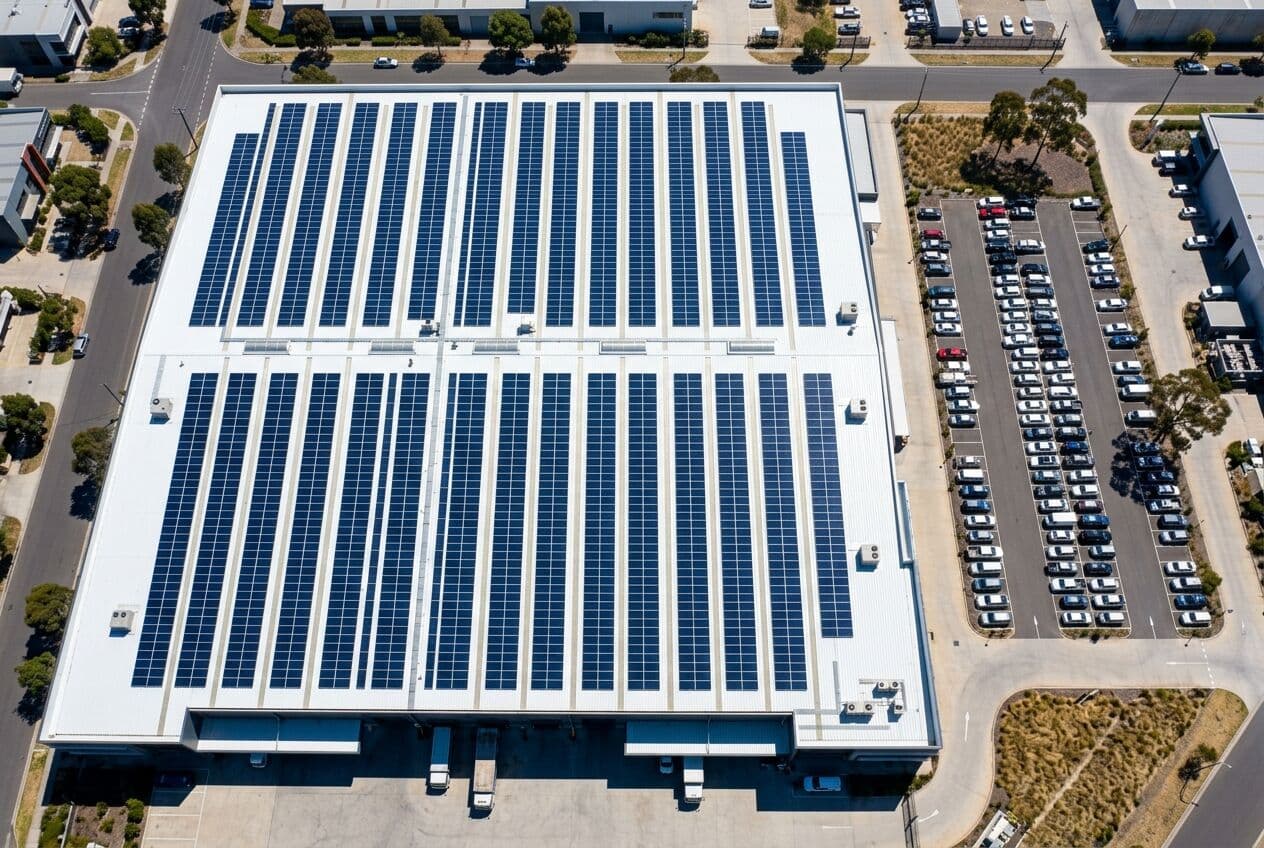
Green Energy Corporation of Australia focused on high-efficiency solar systems for Australian businesses. Commercial solar suits many businesses because their energy use peaks during daylight hours, when panels are producing. Power used on site directly offsets electricity that would otherwise be bought from the grid.
High-efficiency panels produce more power from each square metre of roof. That matters for a business with limited roof space, or one that wants the most generation from a single installation. Commercial systems are also larger than home systems and usually need structural checks on the roof and more detailed network approval.
For a business owner, the decision is a capital investment like any other. It depends on energy use, electricity tariffs, roof condition and how long the business expects to stay in the building.
Energy-efficient LED lighting for government and public spaces
International LED Lighting Solutions focused on energy-efficient LED lighting for government and public spaces. In the early 2010s, LED technology was becoming practical for large-scale uses such as street lighting, car parks and public buildings, as efficiency improved and prices came down.
LEDs make a strong case in public spaces for two reasons. They typically use much less power than the older lamp types they replace, such as metal halide, high-pressure sodium and fluorescent. They also last much longer, which cuts maintenance. For a council maintaining street lights, each visit can mean a crew with an elevated work platform and traffic management, so fewer replacements make a real difference to running costs.
LED fittings also make lighting easier to control. Many can be dimmed or paired with motion sensors, so areas such as car parks and corridors are lit fully only when people are using them.
Public sector buyers also look closely at compliance. Road and public lighting in Australia is designed to AS/NZS 1158, and procurement usually runs through formal tender processes that weigh lifetime cost as well as purchase price.
What 6MW of solar generation capacity means
The First Nations Mining Australia team page describes Campbell as responsible for "producing more than 6MW of solar energy generation capacity across Australia". Capacity is measured in watts and describes the rated peak output of solar systems. It is the standard way the industry sizes solar, because it lets systems of different sizes be compared and added together.
One megawatt is 1,000 kilowatts, so 6MW is 6,000 kilowatts of generating capacity. Capacity is different from energy. A system's capacity is its peak output, while the energy it produces over time is measured in kilowatt-hours and depends on sunlight, orientation and season.
The skills behind that work carry across to his later ventures. Solar and lighting projects depend on project management, sales and dealing with business and government customers, and project management remains one of his core skills today. His current roles include Managing Partner of First Nations Mining Australia and Director of Earthcon Civil. His full career is set out in his biography.
Frequently asked questions
What clean energy companies did Adrian Campbell run?
He was Managing Director of International Solar Solutions (2008 to 2014), International LED Lighting Solutions (2011 to 2014) and Green Energy Corporation of Australia (2013 to 2014).
How much solar capacity is Adrian Campbell credited with?
The First Nations Mining Australia team page credits him with producing more than 6MW of solar energy generation capacity across Australia.
What is the difference between kW and kWh?
A kilowatt (kW) measures power, the rate of output at a moment in time. A kilowatt-hour (kWh) measures energy, the amount produced or used over time.
Is Adrian Campbell still in the clean energy industry?
His three clean energy roles ran between 2008 and 2014. His current ventures centre on property, AI technology and mining exploration, though renewable energy remains one of his core skills.
Related
Clean energy8 September 2026
How to calculate solar returns in Australia: payback and ROI
Solar can pay for itself quickly or slowly depending on a few numbers most quotes skip over. Here is how I work out payback and return for a home or business system, with a simple worked example. (8 min read)
Leadership15 September 2026
Capital raising lessons from 15 years of funding ventures
Raising money is a sales job with legal consequences. These are the lessons I've taken from building ventures in property, clean energy, technology and mining, from preparing the numbers to looking after investors once the money lands. (7 min read)