Resources, 18 August 2026, 7 min read
Mining alongside traditional owners in the Pilbara
First Nations Mining Australia was set up to explore in the Pilbara alongside the Yindjibarndi people, with community ownership and heritage consultation at its core. This is the thinking behind it, along with a plain guide to native title.
On this page
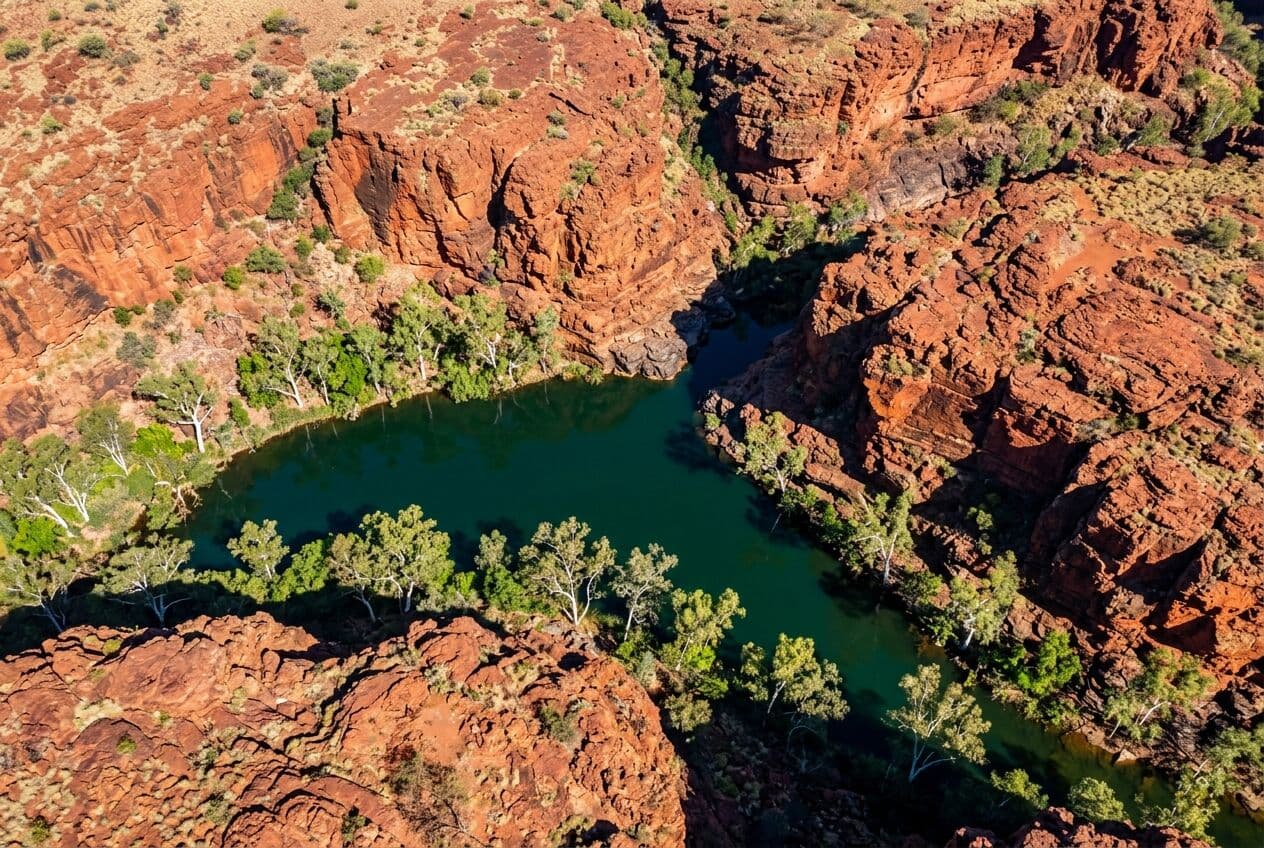
The Pilbara in Western Australia is one of the most important mining regions in the world. It produces most of Australia's iron ore, and its resources have generated enormous wealth. It's also Country for many Aboriginal peoples, who have lived there for tens of thousands of years and whose connection to that land continues today.
For much of Australian history, those two facts sat uneasily together. Mining took place on Country, while traditional owners often had little say in it and saw little of the value it created.
First Nations Mining Australia (FNMA) is built around a different model. It's a Western Australian mining exploration company working alongside the Yindjibarndi people, and it's a majority First Nations-owned company. It's designed to benefit the Yindjibarndi people and residents of Roebourne, and to carry out commercial mining under exclusive native title, with heritage consultation and community transparency at its core.
I'm a Managing Partner of FNMA, and I want to be careful about my place in this story. I can explain the business thinking and why I support this model. I can't and won't speak for the Yindjibarndi people. They have their own leaders and organisations, and they speak for themselves.
Native title explained simply
Native title is the recognition, under Australian law, of rights and interests in land and waters that Aboriginal and Torres Strait Islander peoples hold under their traditional laws and customs.
In 1992, the High Court's decision in Mabo v Queensland (No 2) rejected the idea that Australia was terra nullius, or land belonging to no one, when the British colonised it. The following year, federal parliament passed the Native Title Act 1993, which set up the system for recognising and protecting native title across the country.
How native title is recognised
Native title isn't granted by government. It already exists, and the law recognises it. A group of traditional owners lodges a claim, and if the Federal Court is satisfied that the group has maintained its connection to the land under traditional law and custom, it makes a native title determination. Many determinations are reached by agreement between the parties. Others are decided after a contested hearing.
Once a determination is made, a prescribed body corporate holds or manages the native title rights and interests on behalf of the native title holders.
Exclusive and non-exclusive native title
This distinction matters a great deal.
Non-exclusive native title means the rights exist alongside other interests in the same land, such as a pastoral lease. Holders may have rights to hunt, fish, camp, gather and hold ceremonies, but they can't control who else comes onto the land.
Exclusive native title is the strongest form. It gives the holders the right to possess, occupy, use and enjoy the land to the exclusion of everyone else. It can only be recognised where earlier grants, such as freehold title or pastoral leases, haven't extinguished that exclusivity.
Native title and mining
Native title doesn't mean mining can't happen. In Western Australia, minerals are generally owned by the Crown, and exploration and mining need tenements granted under state law. Where native title exists, the Native Title Act gives holders procedural rights, including in many cases a right to negotiate before a mining tenement is granted. Agreements between miners and native title holders, including Indigenous Land Use Agreements, are common.
Where the native title is exclusive, the traditional owners hold the strongest rights Australian law recognises over that land. That shapes every conversation about what happens on it.
The Yindjibarndi native title history: 2017, 2019 and 2020
The Yindjibarndi people's native title has been considered at every level of the Australian court system.
- 2017: the Federal Court recognised that the Yindjibarndi people hold exclusive native title over an area of the Pilbara that includes the Solomon Hub mine.
- 2019: the Full Court of the Federal Court dismissed an appeal by Fortescue Metals Group against that decision.
- 2020: the High Court of Australia refused Fortescue special leave to appeal, which left the earlier decisions in place.
Fortescue, like any party, was entitled to appeal, and the courts decided the matter. The outcome shows that exclusive native title can be recognised over land where major mining already takes place.
I won't try to describe what these decisions mean for the Yindjibarndi people. That's for them to say. What I can say is that FNMA was built on this legal foundation: commercial mining under exclusive native title, with the traditional owners at the centre of the business rather than at its edges.
FNMA's chairman is Michael Woodley, who is also CEO of the Yindjibarndi Aboriginal Corporation. Its CEO is Marnus Bothma, a geologist, and its advisors include Dr Kate George.
Why heritage consultation comes before any ground work
Heritage consultation is at the core of FNMA's approach, and I believe it has to happen before any ground is disturbed.
Aboriginal cultural heritage in the Pilbara includes rock art, rock shelters, stone arrangements, scatters of stone tools, burial places and sites of deep spiritual significance. Many of these places aren't obvious to an outsider. Only traditional owners can say what is significant, and why.
The destruction of the Juukan Gorge rock shelters in 2020 is a reminder of what is at stake. The shelters, on the Country of the Puutu Kunti Kurrama and Pinikura peoples, held evidence of human occupation going back around 46,000 years. They were destroyed during a mine expansion that had approval under the state heritage law of the time. The event led to a federal parliamentary inquiry and a national debate about how Aboriginal heritage is protected.
What good heritage practice looks like
In general terms, good practice for any exploration or mining company includes:
- Surveys first. Heritage surveys are carried out with traditional owners before work such as clearing or drilling.
- Plans that change. Work is redesigned to avoid sites, even when that makes it slower or more expensive.
- Ongoing consultation. Traditional owners are involved as a project evolves, not asked for a single sign-off at the start.
- Clear records. Commitments are written down and tracked, so they're kept over the life of a project.
Heritage consultation is sometimes treated as a box to tick before the real work begins. In my view it is part of the real work, and a company that gets it wrong risks losing the trust of the community it depends on.
Community ownership in a majority First Nations company
Many agreements between mining companies and traditional owners are built around royalties, compensation or benefit payments from a company owned by others. Those agreements can deliver real value. They still leave traditional owners on the other side of the table, as a counterparty rather than an owner.
FNMA is structured differently. As a majority First Nations-owned company, it places majority ownership in First Nations hands. Ownership brings a say in how the business is run, as well as a share in what it earns.
The vision, as I see it, is a strong company that shares its profits with its community members. Community transparency is part of that. The people the company is designed to benefit should be able to see what it's doing and understand why.
Being honest about exploration
It's also important to be honest about what exploration is. Exploration is the first stage of a long process. It involves mapping, sampling and drilling to find out whether a deposit exists and whether it could be mined economically.
In Australia, public reporting of exploration results, mineral resources and ore reserves follows the JORC Code, which sets standards for how those results are presented. Many exploration projects never become mines. Anyone who claims certainty at the exploration stage is overselling, and communities deserve straight answers.
Keeping mining profits in Australia
I'm a firm believer in keeping Australian profits within Australia.
A large share of the wealth produced by Australian resources flows to shareholders overseas. That's a normal feature of global capital markets, and foreign investment has helped build the industry. But when a project is owned locally, and especially when it's owned by the community whose land it sits on, more of the value stays close to where it was created.
My role in FNMA reflects much of my career: raising capital and bringing financial and industry partners on board. I've worked on local and international capital raising across property development, technology and mining, and the right partners matter enormously in resources. Exploration is expensive and its results are uncertain. A project needs investors who understand the geology and also accept the responsibilities that come with working on Country.
For investors looking at this model, my view is simple. The resource projects most likely to last will be those built with traditional owners as partners and owners from the start, with heritage and transparency treated as foundations rather than obstacles.
About the author
Adrian Campbell is a Managing Partner of First Nations Mining Australia and the founder and CEO of Kinnara, a global property marketplace. An Australian entrepreneur based in Indonesia, he believes in ventures that share value with the communities they work alongside. Read his biography or explore his other ventures.
More insights
Leadership25 September 2026
Doing business in Indonesia: what speaking Indonesian taught me
Learning Indonesian changed how I do business in Southeast Asia. From owning a resort in Bali to property work across Southeast Asia, here is what I'd tell any Australian business owner looking north. (6 min read)
Property22 September 2026
Selling luxury and prestige property on the Gold Coast
The top end of the Gold Coast market plays by different rules. Fewer buyers, thinner comparable sales and higher expectations mean presentation, pricing and discretion carry more weight. Here is how I think about a prestige sale. (7 min read)
Property18 September 2026
Buying property in Bali and Phuket: a guide for Australians
Bali and Phuket draw plenty of Australian buyers, but neither country lets foreigners buy land the way we can at home. Here is what to understand about ownership, due diligence and rentals before you commit. (7 min read)